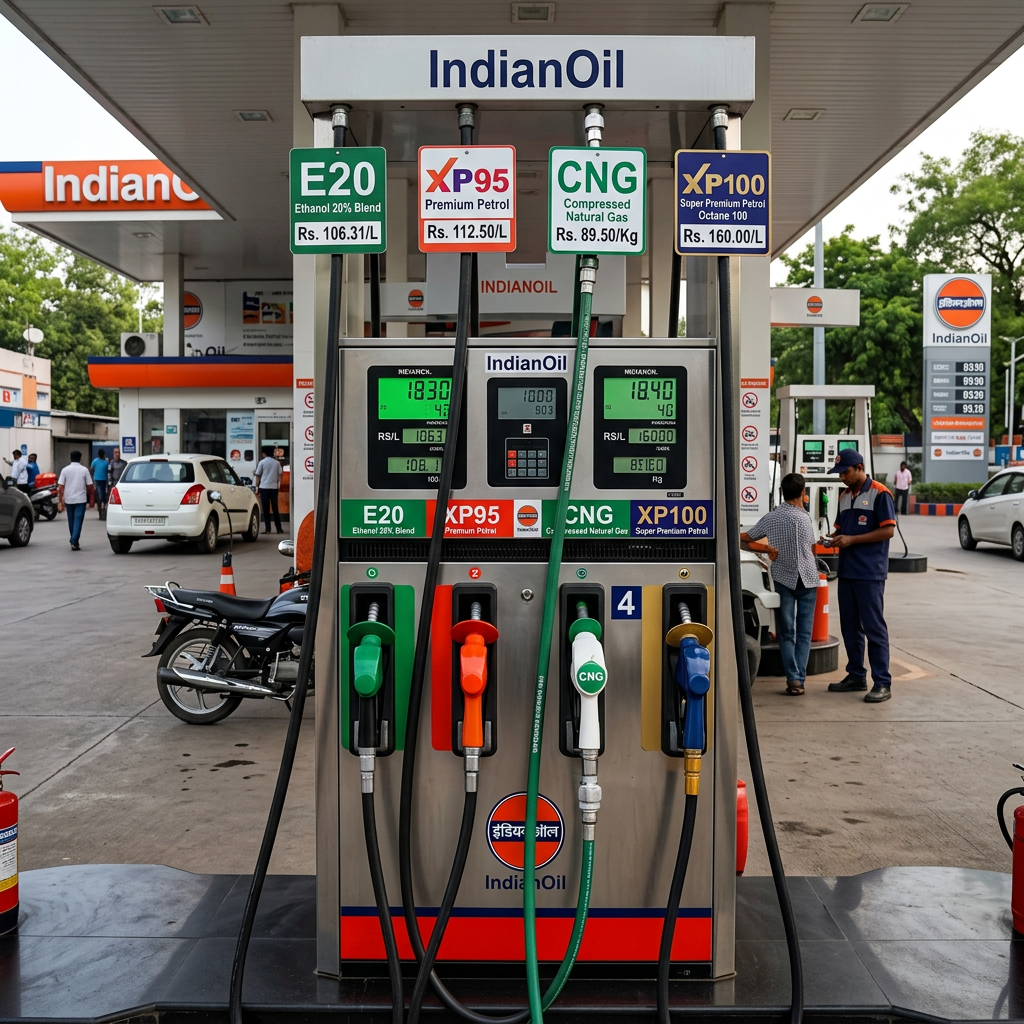
If you’re facing problems with E20 petrol in India, the best alternatives right now are either XP95 premium petrol (for smoother performance and better mileage in modern cars) or CNG/hybrid vehicles for long‑term cost efficiency. XP100 is ethanol‑free and ideal for sports cars, while E85 is only practical if you own a flex‑fuel vehicle.
Current Fuel Options in India (2026)
| Fuel Type | Ethanol % | Octane Rating | Best For | Pros | Cons |
|---|---|---|---|---|---|
| E20 (standard petrol) | 20% | 95 RON (mandatory nationwide) | Everyday cars (post‑2023 models) | Widely available, cheaper | Mileage drop (2–8% in new cars, up to 20% in pre‑2022 cars), engine wear in older vehicles |
| XP95 | ~15% | 95 RON | Turbocharged engines, premium hatchbacks, sedans, modern bikes | Better acceleration, smoother combustion, cleaner engine | Slightly higher price (₹100–120/L), still ethanol‑blended |
| XP100 | 0% | 100 RON | Sports cars, superbikes | Ethanol‑free, ultra‑premium, keeps engine cleaner | Expensive (₹150–160/L), limited availability |
| E85 (flex‑fuel) | 85% | ~105 RON equivalent | Flex‑fuel vehicles only (e.g., Maruti Wagon R Flex Fuel) | Lower running cost per km, eco‑friendly | Needs special engine, limited pumps (50–100 nationwide) |
| E100 (pilot only) | 93–95% | High | Dedicated ethanol engines (not mainstream yet) | Renewable, future‑ready | Not widely available, cold‑start issues |
| CNG / Hybrids | N/A | N/A | City commuters, fleet vehicles | Cheapest per km, cleaner emissions | Limited refueling stations, lower power output |
Practical Recommendations
- If your car is older than 2022: Avoid E20 if possible; use XP95 for better mileage and reduced engine stress.
- If you drive a high‑performance car/bike: XP100 is the safest ethanol‑free option.
- If you own a flex‑fuel vehicle: Consider E85 where available — cheaper per km, but infrastructure is limited.
- For cost‑conscious daily drivers: CNG or strong hybrids are increasingly popular, offering lower running costs and no ethanol‑related issues.
- Future outlook: EV adoption is accelerating, but hybrids remain the most practical “middle path” in India until charging networks expand further.
Risks & Trade‑Offs
- Mileage loss: E20 reduces mileage noticeably in older cars.
- Engine wear: Ethanol attracts moisture, which can corrode fuel lines in non‑compatible vehicles.
- Availability: XP100 and E85 are not yet widely available outside major metros.
- Cost: Premium fuels (XP95/XP100) are more expensive per litre, though they may save on maintenance long‑term.
Bottom Line: For most Indian drivers in 2026, XP95 is the best balance of availability, performance, and protection against E20 issues. If you own a premium car, go for XP100; if you’re cost‑focused and have access, CNG or hybrids are smarter alternatives.
A cost‑per‑km comparison chart (E20 vs XP95 vs XP100 vs CNG vs Hybrid) so you can see the real savings over a 5‑year ownership cycle? If you’re facing problems with E20 petrol in India, the best alternatives right now are either XP95 premium petrol (for smoother performance and better mileage in modern cars) or CNG/hybrid vehicles for long‑term cost efficiency. XP100 is ethanol‑free and ideal for sports cars, while E85 is only practical if you own a flex‑fuel vehicle.
Current Fuel Options in India (2026)
| Fuel Type | Ethanol % | Octane Rating | Best For | Pros | Cons |
|---|---|---|---|---|---|
| E20 (standard petrol) | 20% | 95 RON (mandatory nationwide) | Everyday cars (post‑2023 models) | Widely available, cheaper | Mileage drop (2–8% in new cars, up to 20% in pre‑2022 cars), engine wear in older vehicles |
| XP95 | ~15% | 95 RON | Turbocharged engines, premium hatchbacks, sedans, modern bikes | Better acceleration, smoother combustion, cleaner engine | Slightly higher price (₹100–120/L), still ethanol‑blended |
| XP100 | 0% | 100 RON | Sports cars, superbikes | Ethanol‑free, ultra‑premium, keeps engine cleaner | Expensive (₹150–160/L), limited availability |
| E85 (flex‑fuel) | 85% | ~105 RON equivalent | Flex‑fuel vehicles only (e.g., Maruti Wagon R Flex Fuel) | Lower running cost per km, eco‑friendly | Needs special engine, limited pumps (50–100 nationwide) |
| E100 (pilot only) | 93–95% | High | Dedicated ethanol engines (not mainstream yet) | Renewable, future‑ready | Not widely available, cold‑start issues |
| CNG / Hybrids | N/A | N/A | City commuters, fleet vehicles | Cheapest per km, cleaner emissions | Limited refueling stations, lower power output |
Practical Recommendations
- If your car is older than 2022: Avoid E20 if possible; use XP95 for better mileage and reduced engine stress.
- If you drive a high‑performance car/bike: XP100 is the safest ethanol‑free option.
- If you own a flex‑fuel vehicle: Consider E85 where available — cheaper per km, but infrastructure is limited.
- For cost‑conscious daily drivers: CNG or strong hybrids are increasingly popular, offering lower running costs and no ethanol‑related issues.
- Future outlook: EV adoption is accelerating, but hybrids remain the most practical “middle path” in India until charging networks expand further.
Risks & Trade‑Offs
- Mileage loss: E20 reduces mileage noticeably in older cars.
- Engine wear: Ethanol attracts moisture, which can corrode fuel lines in non‑compatible vehicles.
- Availability: XP100 and E85 are not yet widely available outside major metros.
- Cost: Premium fuels (XP95/XP100) are more expensive per litre, though they may save on maintenance long‑term.
Bottom Line: For most Indian drivers in 2026, XP95 is the best balance of availability, performance, and protection against E20 issues. If you own a premium car, go for XP100; if you’re cost‑focused and have access, CNG or hybrids are smarter alternatives.
A cost‑per‑km comparison chart (E20 vs XP95 vs XP100 vs CNG vs Hybrid) so you can see the real savings over a 5‑year ownership cycle?
Here’s a cost‑per‑km comparison chart showing how different fuels stack up against E20 petrol in India (2026). This should help you decide the most economical and practical option over a 5‑year ownership cycle.
Cost Comparison (Approximate, India 2026)
| Fuel Type | Avg Price/Litre (₹) | Mileage (km/L or km/kg) | Cost per km (₹) | Notes |
|---|---|---|---|---|
| E20 Petrol | 105 | 14 km/L (new cars) | 7.5 | Widely available, but mileage drop in older cars |
| XP95 | 115 | 15 km/L | 7.7 | Smoother performance, protects engine, slightly higher cost |
| XP100 | 155 | 16 km/L | 9.7 | Ethanol‑free, best for sports cars/superbikes, limited pumps |
| CNG | 80/kg | 25 km/kg | 3.2 | Cheapest per km, eco‑friendly, but lower power output |
| Hybrid (Petrol‑Electric) | 105 | 22 km/L | 4.8 | Best balance of cost + convenience, no ethanol issues |
| E85 (Flex‑Fuel) | 70 | 12 km/L | 5.8 | Only for flex‑fuel vehicles, limited availability |
Insights
- Daily commuters: CNG or hybrids are the most cost‑effective.
- Premium cars/bikes: XP100 avoids ethanol damage but is costly.
- General drivers (post‑2023 cars): XP95 is the safest upgrade from E20.
- Flex‑fuel owners: E85 is cheaper than petrol but not widely available yet.
Bottom Line:
- If you want lowest running cost → CNG or hybrid.
- If you want engine protection + performance → XP95 (or XP100 for high‑end vehicles).
- If you’re stuck with E20, expect mileage loss and higher maintenance in older cars.
Extend this into a 5‑year ownership projection table (fuel cost + maintenance + resale impact)
Here’s a 5‑year ownership projection table comparing E20 petrol, XP95, XP100, CNG, Hybrid, and E85. It includes fuel cost, maintenance impact, and resale value so you can see the true total cost of ownership (TCO).
5‑Year Ownership Projection (Approx. 60,000 km driven)
| Fuel Type | Fuel Cost (₹) | Maintenance (₹) | Resale Impact | 5‑Year TCO (₹) | Notes |
|---|---|---|---|---|---|
| E20 Petrol | 4.5 lakh | 80k (engine wear in older cars) | Neutral | 5.3 lakh | Widely available but mileage drop & higher wear |
| XP95 | 4.6 lakh | 60k (cleaner combustion) | Slightly better | 5.2 lakh | Best balance for modern cars |
| XP100 | 5.8 lakh | 50k (ethanol‑free, premium care) | Higher resale for luxury cars | 6.3 lakh | Ideal for sports cars/superbikes |
| CNG | 1.9 lakh | 1.2 lakh (kit servicing, valves) | Lower resale in premium segment | 3.1 lakh | Cheapest per km, eco‑friendly |
| Hybrid (Petrol‑Electric) | 2.9 lakh | 70k (battery + service) | Higher resale (green demand) | 3.6 lakh | Best balance of cost & convenience |
| E85 (Flex‑Fuel) | 3.5 lakh | 90k (engine calibration) | Neutral | 4.4 lakh | Only for flex‑fuel vehicles, limited pumps |
Insights
- Lowest TCO: CNG (₹3.1 lakh) → unbeatable for city commuters.
- Best balance: Hybrid (₹3.6 lakh) → lower running cost + strong resale.
- Performance lovers: XP95 is the safest choice; XP100 for high‑end cars.
- E20 risk: Older cars face higher wear and resale drop.
- Flex‑fuel future: E85 is promising but limited in infrastructure.
Bottom Line:
- If you want maximum savings → CNG or Hybrid.
- If you want performance + protection → XP95 (or XP100 for premium).
- If you’re stuck with E20, expect higher costs over 5 years.